
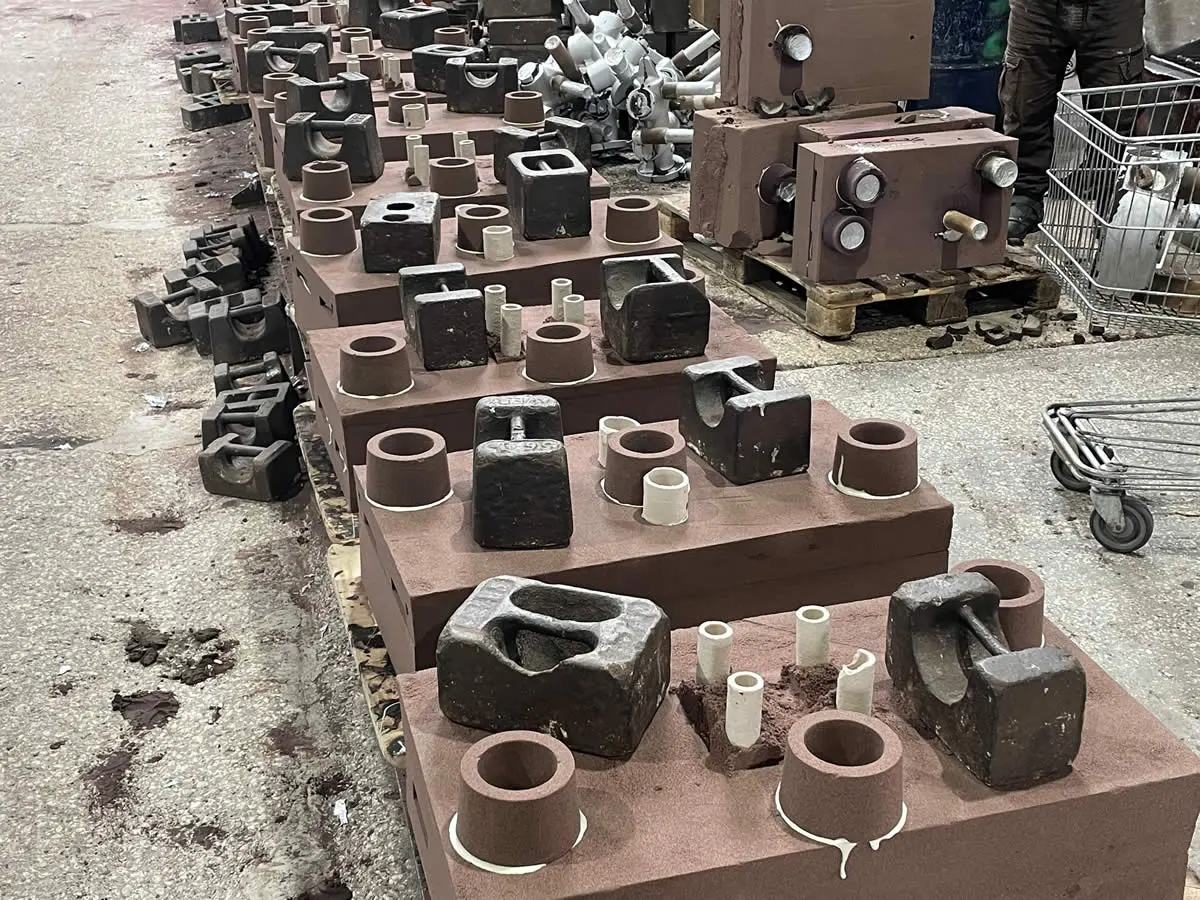
When manufacturing aluminium cast components, selecting the right casting process is an important decision that can influence cost, surface finish, production volume, lead times, and overall component performance.
At Arrow Butler Castings, we support customers with both sand casting and gravity die casting solutions, helping manufacturers choose the most suitable process for their engineering requirements. Each method offers distinct advantages depending on the complexity of the component, production quantities, and the final application.
Understanding the differences between these two aluminium casting methods can help ensure components are manufactured efficiently while meeting the required performance and quality standards.
Comparing Aluminium Casting Methods
Both sand casting and gravity die casting are widely used within the aluminium casting industry. While both processes involve pouring molten aluminium into a mould, the way the mould is created and how the metal solidifies differs significantly.
The best process for a project will depend on factors such as:
- Production volume.
- Surface finish requirements.
- Component complexity.
- Dimensional consistency.
- Tooling costs.
- Mechanical performance.
- Machining requirements.
Choosing the correct process early in a project can improve manufacturing efficiency and reduce long-term production costs.
What is Sand Casting?
Sand casting is one of the most versatile and widely used aluminium casting processes. It involves creating moulds from compacted sand around a pattern of the component.
Once the mould is prepared, molten aluminium is poured into the cavity and allowed to cool before the sand mould is broken away to reveal the casting.
Sand casting is particularly well suited for:
- Complex geometries.
- Large components.
- Low-to-medium production volumes.
- Prototype development.
- Custom or bespoke castings.
Because the tooling costs are generally lower than gravity die casting, sand casting is often the preferred option for smaller production runs or components that may still be undergoing design development.
Advantages of Sand Casting
Sand casting offers several important benefits for engineering manufacturers:
1. Lower Initial Tooling Costs
Sand casting patterns are generally more cost-effective to produce compared to permanent metal dies used in gravity die casting.
2. Greater Design Flexibility
The process allows for more complex shapes, internal cavities, and larger components that may be difficult to achieve using permanent moulds.
3. Ideal for Low-Volume Production
For prototype work, bespoke projects, or lower production quantities, sand casting often provides the most economical manufacturing solution.
4. Suitable for Large Components
Sand casting can accommodate larger and heavier castings that may not be practical using gravity die casting methods.
What is Gravity Die Casting?
Gravity die casting uses permanent metal moulds, typically manufactured from steel. Molten aluminium is poured into the die using gravity, and the mould can then be reused repeatedly for production.
Because the moulds are permanent, gravity die casting offers improved repeatability and dimensional consistency across production runs.
Gravity die casting is commonly used for:
- Medium-to-high production volumes.
- Components requiring improved surface finish.
- Repeat production parts.
- Tighter dimensional consistency.
- Engineering applications requiring repeatability.
While the tooling costs are higher initially, the process becomes highly cost-effective for larger production quantities.
Which Aluminium Casting Process is Best?
There is no single “best” casting method for every component. The correct process depends entirely on the engineering and commercial requirements of the project.
In general:
| Requirement | Best Process |
|---|---|
| Prototype development | Sand casting |
| Low-volume production | Sand casting |
| Large components | Sand casting |
| Complex shapes | Sand casting |
| High-volume repeat production | Gravity die casting |
| Improved surface finish | Gravity die casting |
| Greater dimensional consistency | Gravity die casting |
| Reduced machining requirements | Gravity die casting |
At Arrow Butler Castings, we work closely with customers to help determine which aluminium casting process is best suited for each application.
Choosing the Right UK Aluminium Foundry
Selecting the right aluminium foundry is just as important as selecting the right casting process.
Manufacturers should look for a supplier capable of offering:
- Technical engineering support.
- Flexible production capability.
- Quality control procedures.
- CNC machining services.
- Prototype-to-production scalability.
- Reliable lead times.
At Arrow Butler Castings, we combine aluminium casting expertise with machining and engineering support to help customers move efficiently from concept through to finished component production.
FAQs
1. What is sand casting?
Sand casting is an aluminium casting process that uses compacted sand moulds to create components. It is ideal for complex shapes, prototypes, and low-volume production.
2. What is gravity die casting?
Gravity die casting uses permanent metal moulds to produce aluminium components with improved surface finish and dimensional consistency.
3. Which process is better for low volumes?
Sand casting is typically more cost-effective for low-volume production due to lower tooling costs.
4. Which process gives better surface finish?
Gravity die casting generally produces smoother surface finishes and improved repeatability compared to sand casting.
5. Can you help choose the right process?
Yes. Arrow Butler Castings works closely with customers to determine the most suitable aluminium casting method based on component design, production volume, and application requirements.
Looking for the Right Aluminium Casting Solution?
At Arrow Butler Castings, we provide both sand casting and gravity die casting solutions for customers across a wide range of engineering industries.
Whether you require prototype aluminium castings, repeat production components, or fully machined engineering parts, our team can help identify the best manufacturing process for your project.
Contact us About the best aluminium casting process for your project.
Contact Arrow Butler Castings Ltd
Wittington Way, Chesterfield, Derbyshire S41 9ES
Call: +44 (0)1246 450027 | Email: [email protected]