
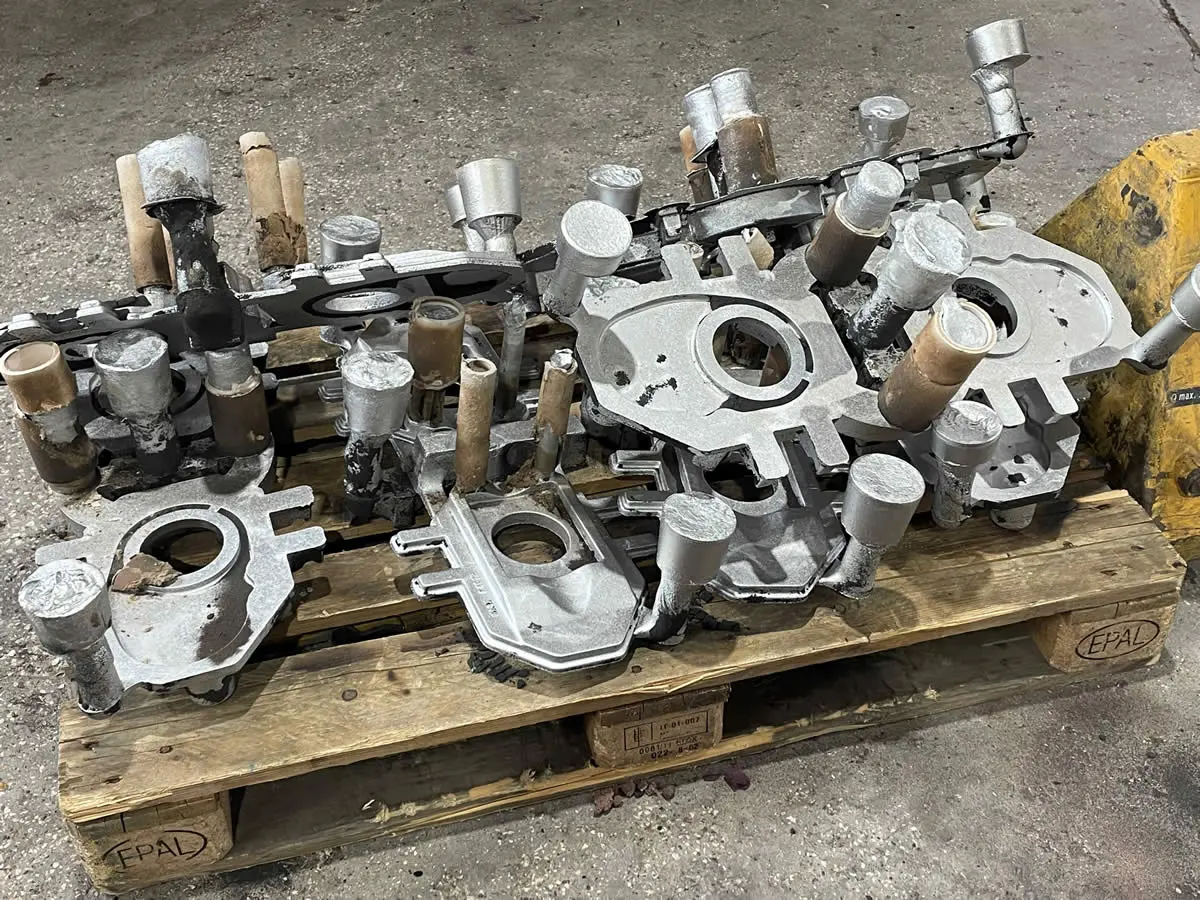
At Arrow Butler Castings, we understand that aluminium casting is often only the first stage in producing a finished engineering component. Through decades of experience supplying aluminium castings to a wide range of industries, we know that many applications require additional processing to achieve the correct strength, finish, precision, and performance.
Aluminium casting is often only the first stage in producing a finished engineering component. While the casting process creates the basic shape of the part, many applications require additional processing to achieve the correct strength, finish, precision, and performance.
At Arrow Butler Castings, we support customers by offering a range of secondary processes alongside our aluminium casting capabilities. By providing these services in-house or through trusted partners, we can help ensure components are fully prepared for their final application.
These processes allow castings to be strengthened, sealed, finished, or machined to meet exact engineering specifications.
Why Secondary Processes Are Important
Different engineering applications place different demands on components. Some parts require extremely tight machining tolerances, while others must withstand pressure, corrosion, or demanding operating environments.
Secondary processes allow manufacturers to improve key characteristics such as:
- Mechanical strength.
- Surface finish.
- Dimensional accuracy.
- Pressure tightness.
- Corrosion resistance.
- Traceability and certification.
By combining casting with these additional processes, manufacturers can supply fully finished components ready for installation.
Benefits of Common Aluminium Casting Processes
| Process | What It Does | Key Benefits | Typical Applications |
|---|---|---|---|
| CNC Machining | Precision cutting and shaping of castings using computer-controlled machines | Achieves tight tolerances, accurate dimensions, and improved surface finish | Housings, pump bodies, mechanical components |
| Heat Treatment | Controlled heating and cooling process to alter the material properties | Increases strength, hardness, and mechanical performance | Structural components, load-bearing parts |
| HIP (Hot Isostatic Pressing) | High pressure and temperature applied to remove internal voids | Reduces porosity and improves structural integrity | Critical engineering components |
| Impregnation | Sealing microscopic porosity within castings | Creates leak-tight components for pressure applications | Pump housings, hydraulic components |
| Powder Coating / Painting | Protective or decorative surface coating | Improves corrosion resistance and appearance | External components and enclosures |
| Certification & Traceability | Documentation and material tracking throughout production | Ensures compliance with quality standards and industry requirements | Rail and regulated industries |
Providing a Complete Manufacturing Solution
Many customers prefer working with suppliers who can support multiple stages of the manufacturing process. By combining aluminium casting with machining, finishing, and quality processes, components can move smoothly from raw casting to finished product.
This integrated approach helps reduce lead times, simplify supply chains, and ensure consistent quality across every stage of production.
Supporting Customers from Casting to Completion
With over 100 years of experience in the casting industry, Arrow Butler Castings understands the importance of delivering reliable, high-quality components. By supporting customers with a range of additional manufacturing services, we aim to provide a complete solution that meets the needs of modern engineering applications.
From aluminium casting through to machining, finishing, and certification, our goal is to ensure every component performs exactly as required in its final environment.
FAQs
1. What additional processes are commonly used after aluminium casting?
Secondary processes such as CNC machining, heat treatment, HIP, impregnation, and protective coatings are often used to improve strength, precision, and performance.
2. Why is CNC machining used after aluminium casting?
CNC machining allows cast components to be finished to precise tolerances, ensuring accurate dimensions and improved surface quality.
3. Can aluminium castings be made pressure-tight?
Yes. Processes such as impregnation can seal microscopic porosity within castings, making them suitable for pressure applications like pumps and hydraulic components.
4. Does Arrow Butler Castings provide machining and finishing services?
Yes. Arrow Butler Castings supports customers with a range of secondary processes including machining, finishing, and certification services.
5. How can I request a quote for aluminium cast components?
You can contact the Arrow Butler Castings team with your drawings or project requirements and we will review the specifications and provide a quotation.
Looking for a Reliable Aluminium Casting Partner?
At Arrow Butler Castings, we combine over a century of foundry expertise with modern aluminium casting and machining capabilities.
Our team supports customers through every stage of the manufacturing process – from casting through to machining, finishing, and certification.
Whether you require custom aluminium castings, prototype development, or repeat production components, we are ready to support your project.
Contact us today to discuss your requirements or request a quote.
Contact Arrow Butler Castings Ltd
Wittington Way, Chesterfield, Derbyshire S41 9ES
Call: +44 (0)1246 450027 | Email: [email protected]