
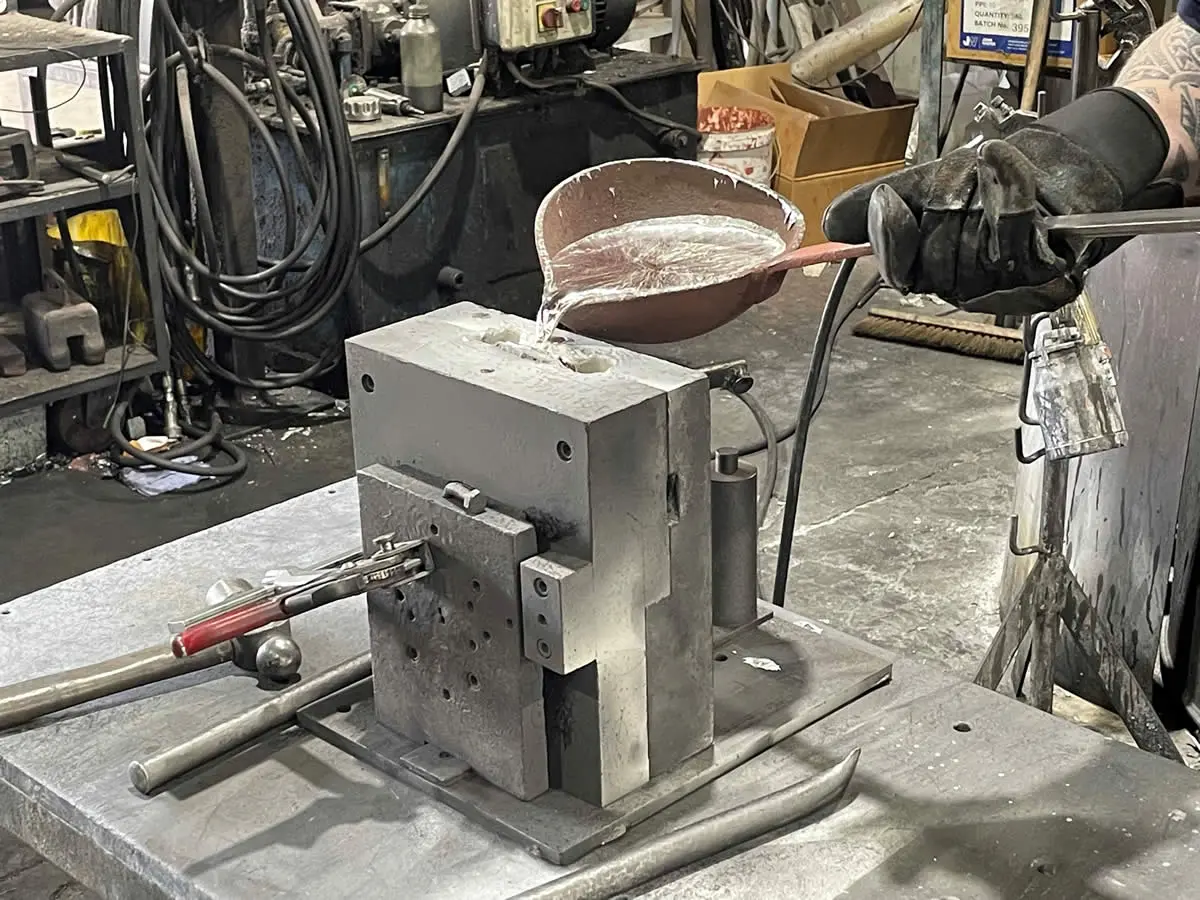
At Arrow Butler Castings, aluminium casting is at the heart of many of the engineering components we manufacture for customers across the UK. Through decades of experience supplying aluminium castings to a wide range of industries, we have seen first-hand how aluminium provides an exceptional combination of strength, light weight, corrosion resistance, and design flexibility. Because of these advantages, aluminium has become one of the most widely used metals in modern engineering applications.
From complex machinery components to structural parts, aluminium castings provide manufacturers with a reliable and efficient way to produce high-quality components.
Lightweight Without Compromising Strength
One of the key advantages of aluminium is its excellent strength-to-weight ratio. Aluminium is significantly lighter than many other engineering metals, yet it still provides the durability required for demanding applications.
This makes aluminium castings particularly valuable in industries where reducing weight can improve efficiency and performance, such as automotive, rail, and industrial equipment.
Excellent Corrosion Resistance
Aluminium naturally forms a protective oxide layer when exposed to air, which helps prevent corrosion. This natural resistance makes aluminium castings suitable for use in environments where components may be exposed to moisture, chemicals, or outdoor conditions.
As a result, aluminium cast parts are often used in applications such as pump housings, enclosures, structural components, and outdoor equipment.
Design Flexibility Through Casting
Casting allows aluminium to be formed into complex shapes that would be difficult or costly to manufacture using other methods. Processes such as sand casting and gravity die casting enable manufacturers to produce components with intricate geometries, internal cavities, and integrated features.
This design flexibility can reduce the need for additional fabrication or assembly, helping to streamline manufacturing processes and reduce overall production costs.
Ideal for Precision Machining
Aluminium is also well suited for CNC machining, allowing cast components to be finished to tight tolerances where required. By combining aluminium casting with precision machining, manufacturers can produce components that meet demanding engineering specifications.
Many foundries now provide both casting and machining capabilities, enabling parts to move efficiently from molten metal to fully finished components within a single facility.
Common Aluminium Casting Alloys
Different aluminium alloys are used depending on the application, required strength, corrosion resistance, and machinability. Three commonly used casting alloys in UK foundries are LM6, LM25, and LM27.
| Alloy | Key Characteristics | Typical Tensile Strength | Elongation | Corrosion Resistance | Typical Applications |
|---|---|---|---|---|---|
| LM6 (Al-Si12) | Excellent castability and fluidity | ~170 MPa | 3-10% | Excellent | Marine components, pump bodies, housings |
| LM25 (Al-Si7Mg) | Heat-treatable alloy with higher strength | ~220-260 MPa (T6) | 3-5% | Very good | Automotive parts, structural castings, aerospace components |
| LM27 (Al-Si-Cu) | Good strength and machinability | ~200–240 MPa | 1-3% | Moderate | Gear housings, engineering components, general machinery |
Each alloy offers different advantages depending on the engineering requirements. For example, LM6 is often chosen for its corrosion resistance and excellent casting properties, while LM25 is commonly used where higher mechanical strength is required.
A Sustainable Engineering Material
Aluminium is also highly recyclable, making it an increasingly important material for sustainable manufacturing. Recycled aluminium retains the same properties as primary metal and requires significantly less energy to produce, helping reduce environmental impact while maintaining performance.
A Material for the Future
With its combination of strength, versatility, and sustainability, aluminium will continue to play a key role in modern engineering. Whether used in sand casting or gravity die casting, aluminium provides manufacturers with a flexible and reliable solution for producing high-quality components across a wide range of industries.
FAQs
1. Why are aluminium castings widely used in engineering?
Aluminium castings offer a strong strength-to-weight ratio, corrosion resistance, and design flexibility, making them suitable for industries such as automotive, rail, machinery, and infrastructure.
2. What aluminium casting processes does Arrow Butler Castings provide?
Arrow Butler Castings offers aluminium sand casting and gravity die casting, allowing us to produce both bespoke components and repeat production parts.
3. Which aluminium alloys are commonly used in casting?
Common aluminium casting alloys include LM6, LM25, and LM27. Each alloy offers different benefits depending on the required strength, corrosion resistance, and machinability.
4. Can aluminium castings be machined after casting?
Yes. Aluminium is well suited for CNC machining, allowing cast components to be finished to tight tolerances and precise engineering specifications.
5. How can I request a quote for aluminium cast components?
You can Contact the Arrow Butler Castings team with your drawings or project requirements and we will review your specifications and provide a quotation.
Looking for a Reliable Aluminium Casting Supplier?
At Arrow Butler Castings, we combine decades of foundry experience with modern aluminium casting and CNC machining capabilities to produce high-quality engineering components.
Our team works closely with customers to deliver reliable aluminium castings, expert engineering support, and consistent manufacturing quality across a wide range of industries.
Whether you require custom aluminium castings, prototype development, or repeat production components, we are ready to help.
Contact us today to discuss your project or request a quote.
Contact Arrow Butler Castings Ltd
Wittington Way, Chesterfield, Derbyshire S41 9ES
Call: +44 (0)1246 450027 | Email: [email protected]